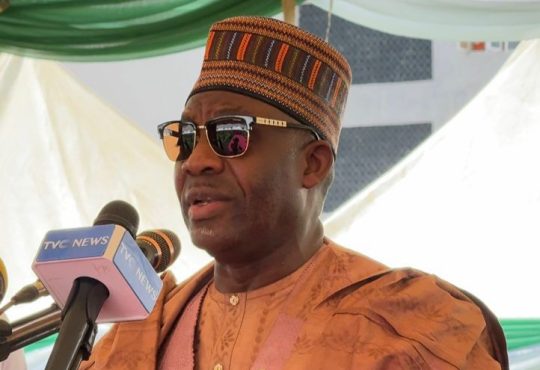
Charity Simon
National Universities Commission (NUC) has reiterated its commitment geared towards continuous and sustained development of curriculum for Nigerian universities to enhance effective learning.
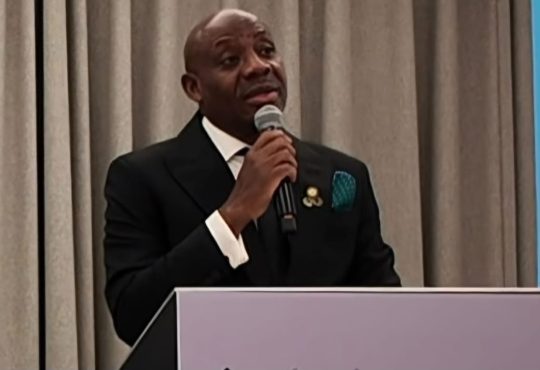
Speaking at a workshop with the theme, “Enhancing Curriculum and Pedagogical Approaches in Nigerian Universities”, organised by the British Council on Monday in Abuja, the Acting Executive Secretary of NUC, Mr. Chris J. Maiyaki, said the development of curriculum for Nigerian universities is one of the core mandates of the Commission
Mr. Maiyaki stated that continuous curriculum reform has been considered a necessary measure to assist schools respond to a fast-changing world.
He noted that the workshop will equip the academic staff of Nigerian Universities with the requisite knowledge and skills to design and develop as well as deploy curriculum, using innovative modern teaching strategies and technologies to enhance the student learning experience in the university system.
The Executive Secretary said teaching and learning experiences, in the 21st century, are evolving at an unprecedented rate, driven by technological advancements, shifting demographics, and evolving global challenges.
“In contemporary education, educators and teachers have gone beyond the call of duty and taken on completely different modes and pedagogical approaches to their practices.
“There has never been a better time to re-evaluate our curriculum delivery to make it more meaningful and effective to proactively contribute to the future of education.
“The theme of the Workshop is very apt at a time in which the NUS is confronted with rapid expansion. Expansion, which must be well managed to enthrone a culture of quality and capacity. Thus, a workshop of this nature is very helpful in benchmarking and building capacity in these very important areas of curriculum and pedagogy”, he said.
Maiyaki however said the curriculum must be attuned to fit its purpose, stressing that while we standardize methods and practice, we must not be oblivious to our cultural context, diversity, unique attributes, resource gaps and the realities of the state.
“Curriculum is the bedrock of education and its development refers to a process of creating educational programmes and materials that align with the current standards and incorporate subjects and skills that are relevant today and for the future.
“The process involves researching and selecting appropriate contents, designing courses and instructional manuals, evaluating the information which is already part of the curriculum, and making updates or changes wherever necessary. The goal is to ensure that students acquire comprehensive learning experiences that meet their needs and prepare them for the demands of the globalised 21 C workforce.
“You are all very aware of what goes into developing curricula. This notwithstanding, let me state that a well-crafted curriculum experience provides classroom teachers, students and policymakers with a measurable plan and structure for delivering high-quality education. An ideal curriculum identifies learning outcomes and core competencies that students must demonstrate before advancing to the next level. It is built on goals and objectives and should aim to enhance skills reinforcement”.
He stated that for the first time in the history of University systems globally, textual materials (in the form of CCMAS Book Series) and CCMAS model videos have been developed by academic experts with enhanced innovative teaching strategies to serve as a guide to academic staff on effective implementation of the developed curriculum.
According to him, the Commission is optimistic that the CCMAS documents which were successfully launched on 5 December 2022 will continue to serve as a guide to Nigerian Universities in the development of the 30% curriculum for their peculiarities concerning the minimum acceptable standards of input and process, as well as, a measurable benchmark of knowledge, 21st-century skills and competences expected to be acquired by an average graduate of each of the academic programmes, for self, national and global relevance.
NUC boss said the efforts of the Commission in the development of the CCMAS have been acclaimed by Nigerian universities, the private sector, and indeed, stakeholders of university education as well as the international community.
“As already established, curriculum development is crucial, evolutionary and dynamic in education and in improving learning outcomes. However, this is not a one-time process. It is essential for the culture of curriculum development and review to be at pace with current global trends.
“I must emphasise that today’s curriculum needs the incorporation of interactive technology to assist students in understanding concepts and learning of new skills.
“Institutions, government and private sector experts should strengthen existing collaboration and feedback mechanisms to incorporate best practices in curriculum development for higher education, thus, shaping a brighter and more resilient future for graduates and national economic development.
He said the Commission is more than disposed to engage in collaborations that will continually reshape our understanding of the importance of curriculum development and effective implementation, in our world today.
Maiyaki further said it’s the policy of the NUC to train and retrain university staff, both academic and non-academic, in the implementation of ideas and policies that are functional to the well-being of our Institutions.
While commending the efforts of some Nigerian universities for organizing training programmes in their various institutions, he said with a stakeholder as the British Council, NUC is encouraged to double its efforts and commitment to staff training.
“It is the Commission’s expectation that at the end of this Workshop, participants from the Universities would be better equipped to implement the CCMAS and related innovations”, he added.
Earlier, the Programme Director, British Council, Mr Chikodi Onyemela, said in recognition of the evolving global workforce, it is imperative for our University System to adapt accordingly to the world’s best practices.
“As we embrace this vision for education, we must absolutely look at what lies ahead, the traditional approach to learning which has long been in our University System cannot be easily overcome. It requires concerted efforts from each of us to challenge the status quo.
“This is not to criticise our educational system, but an invitation for us to think from outside in…this is why we are here today. This workshop is about sharing knowledge, building capacity, fostering collaboration and driving action”, he said.