Charity Simon
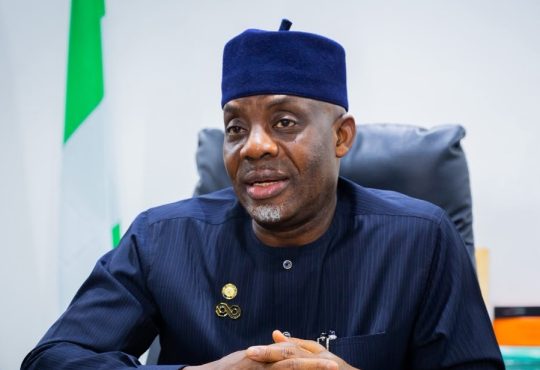
The Minister of Education, Dr. Tunji Alausa, says reforms under President Bola Tinubu’s Renewed Hope Agenda are reshaping the education sector in ways that will impact generations.
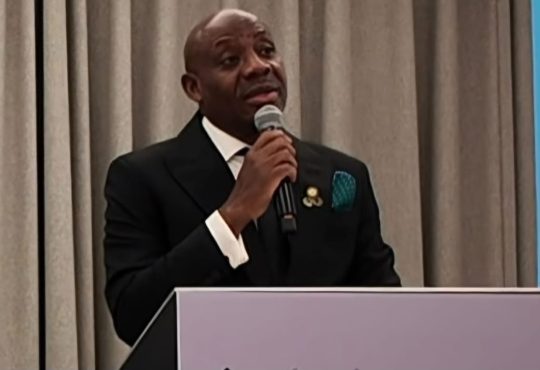
Speaking on Monday at a roundtable during the Education World Forum in London, Alausa engaged education ministers and global stakeholders on Nigeria’s foundational learning reforms.
He said the country has unified foundational literacy and numeracy delivery under a single national standard covering both formal and non-formal systems.
The government is scaling the Reading and Numeracy Activity for Primary 1 to 3 and Teaching at the Right Level for Primary 4 to 6 across 15 states through the Universal Basic Education Commission. The approach relies on structured lesson plans, weekly teacher coaching, and regular assessments.
“For out-of-school children and adolescents, the Accelerated Basic Education Programme developed by the Nigerian Educational Research and Development Council delivers the same literacy and numeracy outcomes within three years. Both tracks now report into the Nigeria Education Data Infrastructure, giving officials the ability to monitor formal and non-formal coverage from one dashboard for the first time.
Alausa pointed to state-led programmes already producing measurable results, including EKOEXCEL in Lagos, KwaraLEARN in Kwara, and BayelsaPRIME in Bayelsa.
” He said KwaraLEARN halved foundational learning deficiencies in less than two years, while BayelsaPRIME improved literacy by 20 percentage points in 19 weeks. The model is now being scaled nationally.
“Foundational literacy and numeracy now sit at the center of the Renewed Hope Agenda and the National Foundational Literacy and Numeracy Programme, he said.
The Federal Government is finalizing a National Policy on Foundational Literacy and Numeracy to provide a legal and institutional framework for reforms across federal, state, and non-formal systems. Through a Partnership Compact with the Global Partnership for Education, 70 percent of funding is tied to measurable outcomes in learning, teacher management, and data use.
The minister also revealed plans to increase the Universal Basic Education Commission’s share of the Consolidated Revenue Fund from two percent to four percent, effectively doubling federal funding for basic education.
He explained that the Accelerated Basic Education Programme provides a recognized pathway for children outside the formal system to transition into Junior Secondary School, with ABEP centers and formal schools using the same coaching tools and materials under SUBEB supervision in 15 states. The arrangement eliminates parallel systems, reduces costs, and ensures consistent quality.
Alausa said the newly deployed National Education Data Initiative has exposed gaps in donor funding effectiveness and shifted the focus from inputs to measurable learning outcomes. With the national policy on foundational literacy and numeracy nearly finalized and one standard across formal and non-formal systems, he said Nigeria is building a foundation designed to outlast any single programme cycle.
“That is how we will end learning poverty at scale,” he said.