Charity Simon
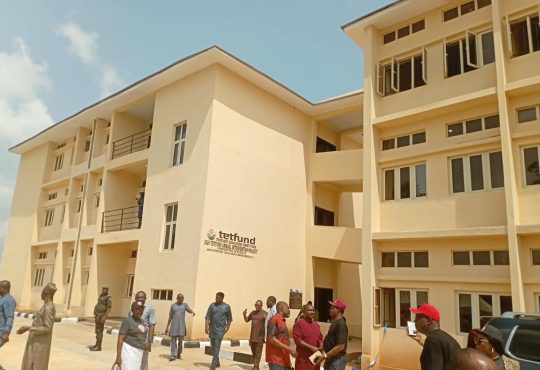
The Federal Government will hand over Information and Communication Technology equipment and materials to 15 Federal and State Colleges of Education on June 2, 2026 in Abuja, under a Japanese Government-backed project to improve access to safe and quality education for girls in West Africa.
The ceremony falls under “The Project for Capacity-building of Teachers to Promote Continuous and Inclusive Access to Safe and Quality Education for Girls in West Africa,” funded by Japan through UNESCO-IICBA.
Officials said the handover goes beyond distributing digital tools and represents a strategic investment in Nigeria’s education system, aimed at producing qualified teachers, encouraging innovative teaching, and expanding inclusive learning opportunities, especially for girls.
The project addresses challenges across West Africa such as low educational attainment, high rates of out-of-school children, learning poverty, gender inequality, and a shortage of qualified teachers.
It targets six West African countries and seeks to accelerate progress through gender-responsive and conflict-sensitive education systems. Key focus areas include strengthening teacher professional development, improving teacher training institutions, and using digital technology to improve teaching and learning outcomes.
Implementation is being done with the African Union International Centre for the Education of Girls and Women in Africa and the AU Education, Science, Technology and Innovation team in Addis Ababa.
Beneficiaries in Nigeria include the Federal Ministry of Education, teacher training institutions, teacher educators, school inspectors, and primary and secondary school teachers.
Equipment to be handed over includes 65 laptops with carrying cases, 71 tablets, four desktop computers, five interactive smart boards, 19 all-in-one desktops, 14 projectors, 15 printers, and 15 backup hard drives.
The 15 beneficiary institutions are Federal College of Education Kontagora, Federal College of Education Zaria, Federal College of Education Technical Gombe, Federal College of Education Yola, Federal College of Education Technical Asaba, Federal College of Education Special Oyo, Federal College of Education Technical Umunze, College of Education Zuba in the FCT, Isaac Jasper Boro College of Education, Enugu State College of Education Technical, Sa’adatu Rimi College of Education Kano, Adamu Augie College of Education Argungu, Shehu Shagari College of Education Sokoto, Adamawa State College of Education Hong, and Taraba State College of Education Zing.
The ministry said the project is expected to increase the number of qualified teachers, promote ICT use in classrooms, improve teaching quality, and create safer, more inclusive learning environments for girls.
The use of gender-responsive and conflict-responsive teaching methods is also projected to improve retention and learning outcomes for female students.
Other strategies under the project include intensive teacher training, school safety guidelines, infrastructure upgrades in training institutions, provision of digital learning tools, and national and regional knowledge-sharing platforms to support evidence-based policymaking.
In addition to this intervention, UNESCO-IICBA and Japan have announced new initiatives for vulnerable groups and crisis-affected communities.
One is “Empowering Female Teachers and School Leaders in Crisis Situations through Integrating Mobile-based Learning in the Pan African Virtual and Electronic University Initiative.”
It will support female teachers and school leaders in crisis areas with mobile learning solutions developed with Japanese EdTech firm Castalia Co. Ltd and the AU’s Pan African Virtual and Electronic University.
Nigerian institutions under this initiative include Jigawa State College of Education Gumel, Umar Ibn El-Kanemi Ibrahim College of Education Science and Technology Bama, College of Education Gashua Yobe, Federal University of Education Pankshin, Adeyemi Federal University of Education Ondo, Federal College of Education Ofeme Ohuhu Abia, Alvan Ikoku Federal University of Education Imo, and Cross River State College of Education Akamkpa.
Another intervention is “The Project for Enabling Out-of-School Children to Join Formal Education through Accelerated Learning.” It aims to reintegrate out-of-school children through a flexible accelerated learning model that combines academic support with psychosocial care, life skills, and safe learning spaces.
The project will also strengthen institutional capacity and policy support for accelerated learning, establish safe spaces for adolescent learners, reinforce community advocacy, and promote monitoring and knowledge sharing for sustainable expansion.
The Federal Ministry of Education commended Japan, UNESCO-IICBA, the African Union, and other development partners for their continued support in transforming education in Nigeria and advancing inclusive, equitable, and quality education for all.