Charity Simon
The Federal Government has called on state governments, local government authorities and private school owners to fully participate in the Digitalised Nigeria Education Management Information System (DNEMIS), saying credible data is critical to the success of education reforms.
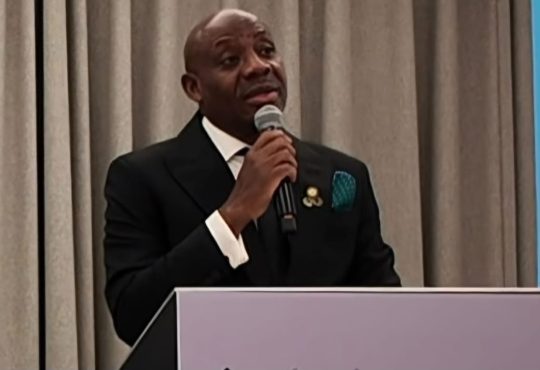
Minister of Education, Dr. Tunji Alausa, made the call in Abuja on Wednesday during the official launch of the platform, which provides detailed information on classrooms, teachers, enrolment, computer facilities, water, sanitation and hygiene infrastructure, as well as other indicators needed for effective monitoring and supervision.
Alausa said DNEMIS will transform how education data is collected, analysed and used, enabling governments at all levels to monitor schools, identify gaps and deploy resources where they are most needed. “You have to get the data right.
Data allows us to monitor, design interventions, evaluate outcomes and plan proactively for the future. Without accurate data, meaningful development is impossible,” he said.
He commended development partners, including the World Bank, the European Union, the Norwegian Government, UNICEF and other international organisations, for supporting the development of the new education data infrastructure.
The minister revealed that the platform’s implementation had experienced delays before partners stepped in to accelerate the rollout. “We were ready to invest whatever it took because without data, we would not know where development is needed. Our partners helped us overcome significant challenges and shortened the implementation timeline considerably,” he said.
Alausa also acknowledged the contributions of ICT experts and international collaborators who worked with Nigeria to build an integrated and sustainable education information system.
He said government would continue strengthening collaboration to ensure the platform remains functional, inclusive and beneficial to every level of the education sector.
Addressing private school proprietors, he urged them to upload their data onto the national platform and assured them the exercise was not for taxation.
“When you saw the demonstration, almost 90 per cent of public school data had been captured, but private schools were only at about 50 per cent. I want to encourage every private school to register and upload its data. Do not worry, the government is not collecting this information to tax you. We recognise the critical role private schools play in Nigeria’s education sector,” he stated.
He noted that private schools now account for a significant share of basic education, with nearly three-quarters of junior secondary schools privately owned. “We need every school to be part of this system because education planning must reflect the realities on the ground,” he added.
Alausa said education commissioners, local government education authorities and school administrators would have access to real-time information to support evidence-based decisions and improve service delivery.
The platform currently contains data from about 90,000 public schools, with efforts ongoing to achieve complete coverage of both public and private institutions.
He stressed that with more than 50 million learners in Nigeria’s education sector, accurate and timely data is indispensable for national planning.
“We are building a system that will support policy decisions, improve accountability and strengthen education delivery across the country. Every stakeholder has a responsibility to ensure the information is complete and accurate,” he said.
The minister called on state governments to intensify awareness campaigns and mobilise schools within their jurisdictions, while pledging continuous engagement with stakeholders to improve data quality and expand coverage.
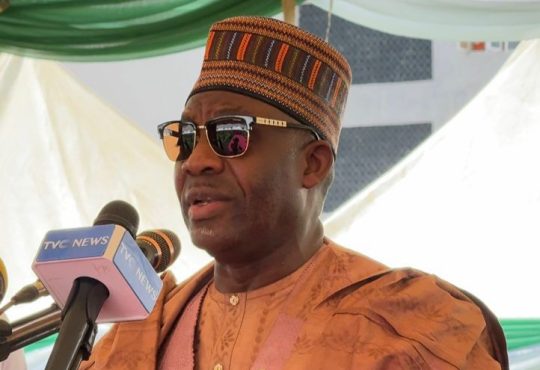
Also speaking, the Director-General of the National Bureau of Statistics, Semiu Adeyemi Adeniran, pledged the agency’s full support for DNEMIS as the country’s single, reliable source of education data. He said NBS would integrate its data systems with the education database to improve planning, policy implementation and monitoring across the sector.
“We just want one true source of data for education, and we are going to link the NBS platform with the ministry’s system so we can produce and disseminate reliable education statistics with wider national coverage,” he said.
Adeniran disclosed that NBS would also support the platform by mapping out-of-school children through household surveys and using its Small Area Estimation data to validate information generated by the education database. “The data that comes from our Small Area Estimation will help validate and cross-check what is on the education platform,” he said.