Charity Simon
The Federal Government has intensified efforts to address Nigeria’s learning crisis with a nationwide learning assessment designed to measure pupils’ literacy, numeracy and cognitive skills.
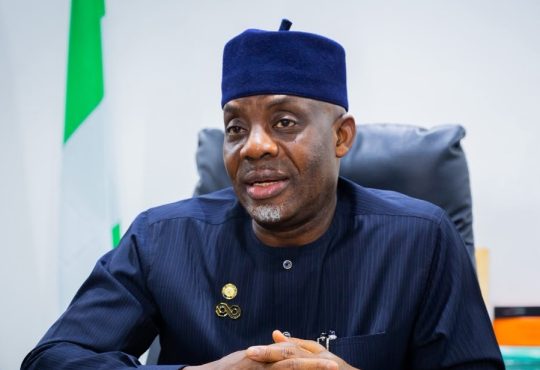
Minister of Education, Dr. Tunji Alausa, said the exercise will provide the data needed to reform the country’s education system.
He spoke in Abuja on Friday after monitoring the National Learning Assessment at Government Secondary School, Kuje; Government Junior Secondary School, Kuje Central; and Topaz Model Primary School, Kango.
Alausa said the assessment covers Primary Three, Primary Five, Junior Secondary School 2 and Senior Secondary School 2, with focus on English Language, Mathematics, Basic Science and non-cognitive skills to determine the quality of learning across the country.
“We are conducting this National Learning Assessment to determine the level of understanding of our students in key subjects and to measure their literacy, numeracy and cognitive development,” he said.
He explained that the exercise is a key component of the Nigerian Education Sector Renewal Initiative and will serve as a benchmark for tracking learning outcomes every three years.
According to him, Nigeria had not consistently conducted national learning assessments, with the last by the Universal Basic Education Commission in 2023 and the previous one by the Federal Ministry of Education in 2019.
“Learning assessment should be conducted every three years. We have now put robust processes in place, and UBEC has been directed to make dedicated budgetary provisions so the assessment becomes a regular national exercise beginning from 2029,” he said.
The minister expressed concern over Nigeria’s learning poverty, noting that many children cannot read age-appropriate texts by the age of 10. He said the assessment will enable government to identify learning gaps and implement targeted interventions to improve educational outcomes nationwide.
Alausa added that the ministry has harmonised multiple assessment models into a single national framework to ensure consistency and enable year-on-year comparison of learning outcomes.
“We have customised different learning assessments into one standardised National Learning Assessment. This will allow us to consistently measure progress as we transform the education sector and ensure every Nigerian child receives quality education,” he said.
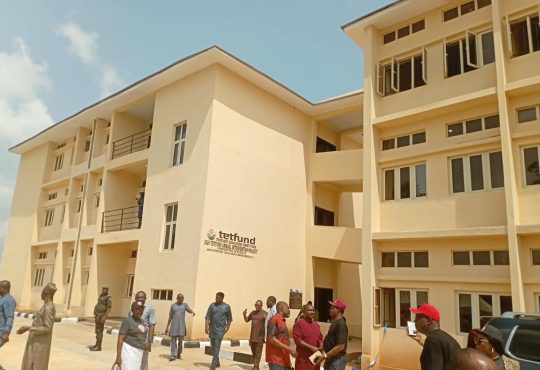
Speaking on school infrastructure after inspecting public and private schools in Kuje, the minister commended the learning environment in the FCT, particularly the cleanliness and condition of public schools.
“I was impressed by what I saw in the public schools. The environment was clean, the students looked healthy and happy, and there was evidence of good maintenance and greening. I commend the FCT Administration for the quality of the schools,” he said.
While acknowledging the role of private schools in expanding access to education, Alausa called for stronger regulation to ensure compliance with minimum standards.
“Private schools have helped us keep many children in school. Without them, we would have far more out-of-school children. What we need is to encourage them while strengthening regulation to ensure they meet the required standards and provide conducive learning environments,” he added.
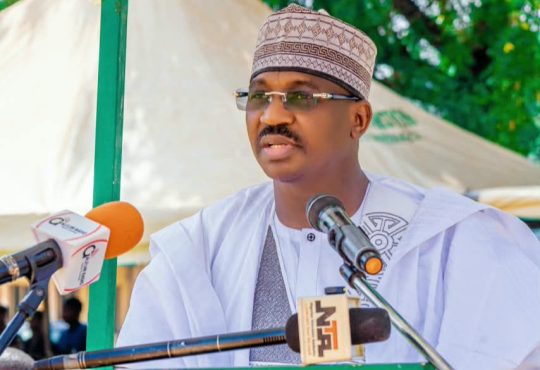
Also speaking, the FCT Mandate Secretary for Education, Dr. Danlami Hayyo, commended the Federal Ministry of Education for introducing the nationwide assessment, describing it as a major step towards improving learning outcomes.
He said the FCT Administration remains committed to supporting the initiative, noting that more than 120 public schools had been renovated to improve the quality of education.
“We appreciate the Minister for this initiative. The FCT Administration has renovated over 120 public schools, including Government Secondary School, Kuje, and we will continue to support every policy that will improve the quality of education in line with President Bola Tinubu’s Renewed Hope Agenda,” he said.