Charity Simon
The Executive Secretary of the Universal Basic Education Commission (UBEC), Aisha Garba, has described Delta State’s tech-based teacher attendance system as a model other Nigerian states can learn from to boost accountability and raise learning standards.
Garba said the Attend360 platform, which tracks teacher presence, shows how technology can tackle one of the most basic needs for effective schooling: making sure teachers are in class and teaching.
“You cannot have quality education or real learning without a good teacher present in the classroom. You can construct as many schools as possible, but without teachers, and good ones at that, learning simply will not happen,” she stated.
She spoke in Asaba during a courtesy call on the Delta State Government, represented by Deputy Governor Sir Monday Onyeme. The visit was part of the 30th Quarterly Meeting between UBEC Management and Executive Chairmen of State Universal Basic Education Boards (SUBEBs).
Garba said Delta was chosen to host the meeting because of the strides it has made in education, especially in using technology to manage schools, monitor teacher attendance, and enforce accountability.
The meeting, with the theme “Repositioning Basic Education in Nigeria to Optimise Investment and Impact,” gathered UBEC officials and SUBEB Chairmen nationwide to discuss how funding, innovation, and proper execution can produce better results in basic education.
She praised Delta for its performance in drawing down UBE matching grants, noting that the state has accessed its grant up to 2025 and is among the frontrunners in basic education delivery.
However, she urged the state to make sure all available UBEC funds are used and approved projects are carried out quickly, adding that education spending must lead to improved facilities, stronger teaching, and better student outcomes.
Garba also advised Delta to take advantage of the education arm of the HOPE Education Programme, a World Bank-backed initiative with up to $500 million set aside for the sector.
She noted that one of the conditions for states to participate is to access the 2026 matching grant and implement at least 50% of the 2025 Action Plan. She encouraged Delta to keep investing, use available resources well, and leverage UBEC’s technical support.
Responding, Deputy Governor Sir Monday Onyeme assured UBEC that Delta will keep improving its education system and expanding access to quality learning.
Onyeme clarified that the state’s unspent funds stood at about ₦1 billion, not ₦8 billion as earlier mentioned. He added that Delta had executed roughly 90% of its 2025 Action Plan and had already received the 2026 matching grant.
He described education as a top priority for Delta and promised continued progress.
“We will keep improving and doing our best to ensure as many citizens as possible get access to education,” he said.
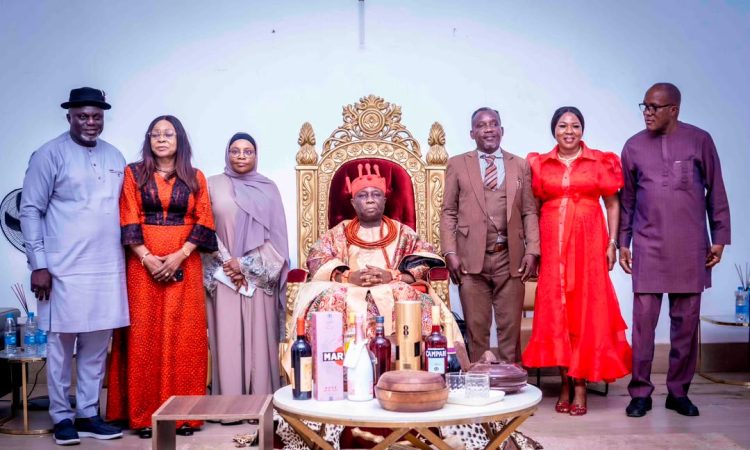
The discussion on strengthening basic education also continued during a visit to the Asagba of Asaba, HRM Prof. Epiphany Azinge. Garba stressed the role of traditional rulers and other stakeholders in pushing the national education agenda forward.
She said UBEC’s objective is to guarantee that every Nigerian child, no matter their location, background, or financial status, has access to quality basic education.
“Our aim is that every Nigerian child, whether from a poor or wealthy home, and wherever they live, must have the chance to get quality basic education,” she said.
Garba acknowledged the Asagba’s support for education projects in Delta, including smart schools, and called for closer collaboration between traditional institutions, government, and education bodies.
In his response, the Asagba of Asaba, Prof. Epiphany Azinge, said basic education forms the bedrock of Nigeria’s future because it is where children are trained and prepared for life.
He emphasized that good teachers in primary schools are critical, noting that the caliber of teachers determines the caliber of graduates.
“If you have quality teachers, you will produce quality citizens,” he said.
Azinge urged UBEC and SUBEB Chairmen to address basic education challenges frankly and come up with practical solutions.
He insisted that no child should be excluded, including children with disabilities and those from vulnerable homes, because every Nigerian child deserves access to basic education.
Summing up the engagements with the Delta Government and the Asagba, Garba said the focus now is to ensure that funding, innovations, and commitments across states lead to tangible improvements in classrooms and better learning for pupils.
She reaffirmed that UBEC will keep partnering with states, traditional rulers, and other stakeholders, offering technical support and collaboration to strengthen basic education across the country.
The Commission, she said, remains dedicated to ensuring that every Nigerian child, regardless of where they live or their situation, can access quality basic education and a brighter future.