Charity Simon
The Federal Government has launched a restructuring of the Monotechnic and Technical Education Board (MBTE) to enhance its ability to oversee polytechnics, monotechnics and other technical institutions nationwide.
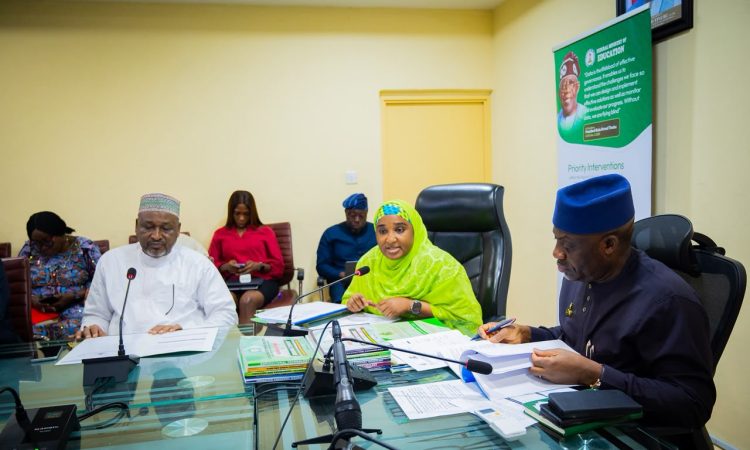
The Minister of Education, Dr. Maruf Tunji Alausa, announced this in Abuja. He said the goal is to reposition the agency to lead technical and vocational education and training (TVET) in line with President Bola Tinubu’s Renewed Hope Agenda.
According to Alausa, the ministry has engaged KPMG to carry out a full evaluation of MBTE and design a new organisational structure and operating model for the body.
He explained that the review will pinpoint institutional weaknesses and suggest reforms to improve MBTE’s internal systems, supervisory role and coordination of institutions under its purview.
The Minister stressed that the performance of agencies tasked with running and regulating technical education will decide how successful the government’s plan to scale up skills development becomes.
Alausa insisted that MBTE must be transformed into an effective agency that ensures polytechnics, monotechnics and other technical schools graduate students with practical, job-ready skills.
He said the restructuring goes beyond paperwork. It is part of a wider push to make technical and vocational education a key driver of jobs, entrepreneurship and productivity.
“Polytechnics are all about technical and vocational education and training. It’s about skills. That’s what we’re talking about,” the minister stated.
This thinking, he added, is behind the current review of polytechnic curricula and the creation of National Occupational Standards to align training more closely with industry needs and job prospects.
The curriculum review, funded with N1 billion by the Tertiary Education Trust Fund (TETFund), produced 27 new National Occupational Standards and updated 4 existing ones, bringing the total to 31.
Alausa said the standards will establish a clear skills progression from artisan-level training up through the National Certificate, Ordinary National Diploma (OND) and Higher National Diploma (HND).
The aim, he noted, is to ensure Nigerians who go through technical education gain hands-on competencies that can lead to employment, self-employment and higher productivity.
Giving an industry view, Adewale Ajayi, Partner and Head of Tax, Regulatory and People Services at KPMG Africa and KPMG Nigeria, said the firm’s assessment revealed major challenges but also opportunities in Nigeria’s TVET system.
Ajayi disclosed that about 93% of Nigeria’s workforce is in the informal sector, while roughly 12% of youths are not in school, work or technical training.
In spite of this, he said Nigeria ranks well for TVET graduate employability — second only to Singapore among the countries reviewed.
This, he noted, shows the potential of technical and vocational education to deliver graduates with skills that match market demand.
However, Ajayi urged urgent action on curriculum updates. He said over 55% of the curricula reviewed were outdated, including courses in engineering, science, arts and design.
He blamed funding gaps and the five-year review cycle for the problem, but described the recent update of the agriculture curriculum as a step in the right direction.
Alausa said the KPMG recommendations, combined with ongoing curriculum and skills reforms, will form the basis for strengthening MBTE’s capacity to regulate and coordinate technical institutions.
He added that a stronger MBTE will boost accountability in institutions and ensure technical education keeps pace with evolving industry and economic needs.
The minister restated the Federal Government’s commitment to building a TVET system focused on practical skills, industry relevance, employability and productivity.
He described the repositioning of MBTE as central to the government’s human capital development plan, with the end goal of producing a skilled, productive and globally competitive Nigerian workforce.