Charity Simon
The Minister of Education, Dr. Maruf Tunji Alausa, has made participation in Nigeria’s national tertiary education ranking exercise compulsory for all universities, polytechnics and colleges of education, both public and private, in a major expansion of the country’s institutional accountability framework.
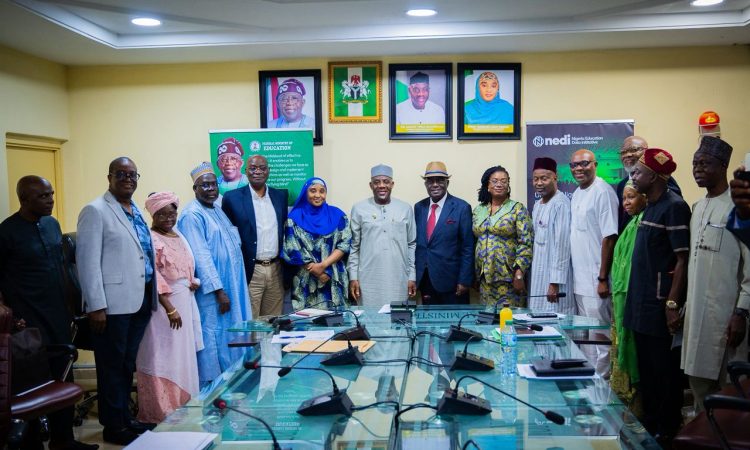
The Minister announced the directive in Abuja at a meeting with the Nigerian Universities Ranking Advisory Committee (NURAC), which has itself been renamed and repositioned as the Nigerian Tertiary Education Ranking Advisory Committee to reflect its broadened mandate.
Dr. Alausa described the expanded framework as a central pillar of President Bola Tinubu’s education reforms under the Renewed Hope Agenda, delivered through the Nigeria Education Sector Renewal Initiative (NESRI).
He said the initiative was designed to strengthen quality assurance, accountability, institutional performance and global competitiveness across the tertiary education system, giving institutions clear benchmarks to measure progress, identify gaps and drive continuous improvement through healthy competition.
The Minister confirmed that the 2026/2027 ranking exercise for universities will commence in September, with the committee to determine timelines for extending the process to polytechnics and colleges of education. He added that the Federal Government, through the Tertiary Education Trust Fund (TETFund), will fund the exercise, while the Ministry develops guidelines to institutionalise it and formally notifies vice-chancellors and heads of institutions that participation is now mandatory.
On her part , the Minister of State for Education, Professor Suwaiba Sa’id Ahmad, described the initiative as a decisive step toward strengthening accountability and quality across Nigeria’s tertiary system. She said healthy competition would push institutions to confront weaknesses and consistently raise the quality of education they deliver.
Professor Suwaiba emphasised that the ranking exercise must cover public and private institutions alike, providing a common mechanism for establishing and sustaining minimum standards sector-wide. She pledged the Ministry’s full support, noting the exercise would help institutions identify their strengths and weaknesses while enabling measurable improvement as the sector continues to expand.
Emeritus Professor Peter Okebukola, Chairman of the committee and former Executive Secretary of the National Universities Commission (NUC), said the engagement with the Minister followed a memorandum commending the Tinubu administration for the rising number of Nigerian universities gaining international recognition, and calling for greater investment to accelerate that progress.
Professor Okebukola said the Minister’s response exceeded the committee’s original proposal, leading to the expansion of its mandate to cover polytechnics and colleges of education and its transformation into the newly constituted body. He expressed confidence that sustained investment, stronger institutional capacity and the national ranking framework would position more Nigerian institutions to compete confidently on the global stage.
Reaffirming the Ministry’s commitment, Dr. Alausa pledged continued policy direction, funding and capacity-building support to ensure the ranking exercise remains credible, sustainable and impactful. He said the Ministry would partner with the committee on in-service training and institutional capacity-building programmes nationwide, with the goal of securing greater global recognition for Nigerian institutions in future international rankings.