Charity Simon
The Joint Admissions and Matriculation Board, JAMB, has begun plans to include life skills and critical thinking in the Unified Tertiary Matriculation Examination as part of efforts to make the nation’s tertiary admission test reflect current realities in higher education.
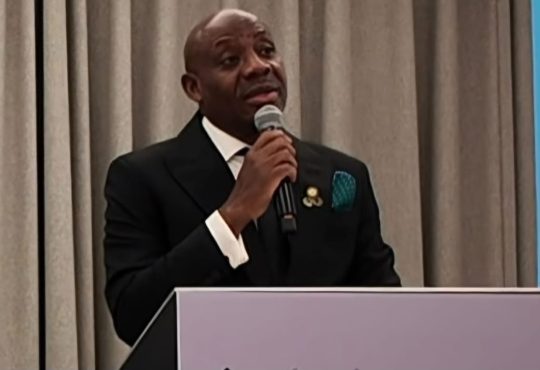
The Registrar of JAMB, Prof. Segun Aina, disclosed this on Wednesday in Abuja at the inauguration of a committee of stakeholders and experts tasked with developing a framework for incorporating life skills and critical thinking into the UTME.
Aina said the move became necessary because UTME is essentially a ranking examination for candidates who already hold O-Level results, and therefore should not simply repeat the subject-based assessment already done by bodies like the West African Examinations Council, WAEC, and the National Examinations Council, NECO.
According to him, UTME candidates have already been tested on subject knowledge at the O-Level.
“So ours is a ranking exercise. It is not necessarily to test subject matter knowledge. For UTME to be purely subject-based is a duplication of effort,” the Registrar said.
He said the Board wants to integrate skills that candidates use in everyday life into the assessment, noting that there is need to critically examine whether the current approach still effectively predicts how candidates will perform in tertiary institutions.
“Are the methods we are using to determine who will succeed in the university, polytechnic or college of education still valid? Are they good enough?” Aina queried.
The Registrar observed that the UTME format has remained largely the same for over 30 years, stressing that JAMB must evaluate whether its testing method remains relevant in today’s educational landscape.
“The biggest room in the house is the room for improvement. So we want the committee to help us look into this,” he added.
Aina said JAMB deliberately brought together stakeholders from different parts of the education sector because the Board cannot decide on the best approach in isolation without considering those who will be impacted by the reforms.
“We cannot be judges in our own case. So we assembled a team of stakeholders who are experts in their own right to help us examine this issue, guide us and ensure that any decision we take is widely acceptable to all parties that will be affected,” he said.
He described the task as a national assignment, adding that the committee has been given an initial four weeks to look at the proposal conceptually.
On the timeline, Aina said, “We will respond to the requests of the committee as they deem necessary, within reason. But they have been given an initial period of four weeks to look into this.”
Speaking at the event, the Minister of Education, Dr. Tunji Alausa, who was represented by the Technical Assistant to the Acting Permanent Secretary, Federal Ministry of Education, Mr. Oni Adedeji, said the initiative aligns with the Federal Government’s broader plan to reform assessment in the education sector.
He charged the committee to come up with standardized, fair and transparent assessment models that can test candidates’ analytical, logical and verbal reasoning skills beyond rote memorization of subjects.
Alausa said the committee is expected to decide how the proposed elements will be introduced, whether as a separate standardized test or by embedding them into existing UTME subjects.
According to the minister, the reform is aimed at building an assessment system that evaluates not just what young Nigerians know, but how well they can think, reason and solve problems.
“I strongly believe that getting this right will shape how Nigeria assesses readiness for tertiary education now and in the years ahead,” Alausa said.
He assured the committee of the Ministry’s full support and collaboration.
In his response, the Chairman of the committee, Prof. Boniface Nworgu of the University of Nigeria, Nsukka, said the value of UTME should ultimately be judged by its capacity to identify candidates with the highest potential to succeed in tertiary education.
Nworgu explained that JAMB conducts a selection examination and not a certification examination, hence the need for the test to effectively predict academic potential.
“What JAMB is expected to do and what it is doing is to look at measures that can help us select candidates with the highest promise of succeeding in academic work at the tertiary level,” he said.
He argued that the validity of UTME must be regularly reviewed because the curriculum and skill requirements of tertiary institutions have evolved significantly.
According to him, the shift in university curricula from the Benchmark Minimum Academic Standards, BMAS, to the Core Curriculum and Minimum Academic Standards, CCMAS, now places more emphasis on skills and critical thinking.
“The focus now is on skills and critical thinking. So what JAMB is trying to do is understandable from that point of view,” Nworgu stated.
He noted that the committee will not restrict itself to only life skills and critical thinking if it finds other measures that can enhance the predictive validity of UTME.
“If during our deliberations we discover other measures that can improve the predictive validity of UTME, we will definitely make appropriate recommendations,” he said.
Nworgu also assured that the committee will demand evidence to ascertain whether any proposed changes to UTME are achieving their intended goals.
“We are not going to make that mistake in this case,” he said, referring to interventions introduced without a baseline to measure their impact.
He added: “If we have used UTME for this many years and we want to come up with a modified UTME, there must be evidence at the end of the day that this effort was worthwhile, that we did not waste taxpayers’ money doing what is beneficial to society.”
He promised that the committee will deliver on its mandate and not disappoint JAMB.
The committee is made up of representatives from universities, examination bodies, professional regulatory councils, student groups, secondary schools and development organisations.
Members include Prof. Boniface Nworgu, University of Nigeria, Nsukka – Chairman, Prof. M. Yakasai, Bayero University, Kano, Afolabi S. Imoukhuede, Prof. Idris Mohammed, Medical and Dental Council, Zakariyau Abdullahi, WAEC, Engr. Prof. Aaron Aboshio, Council for the Regulation of Engineering in Nigeria, Dr. Murtala Aliyu Sakwa, National Board for Technical Education, Prof. Duke Okoro, Council of Heads of Polytechnics and Colleges of Technology in Nigeria, and Jiya Umar Mohammed, All Nigerian Conference of Principals of Secondary Schools.
Others are Dr. Chima Egbujuo, Nigerian Educational Research and Development Council, Dr. Emmanuel Udontre, Nursing and Midwifery Council of Nigeria, Salawudeen Kamorudeen Opeyemi, Senior Special Assistant to the President on Students’ Engagement, Catherine-Onyejeche Ibrahim, United Nations Development Programme, Dr. Fadipe E. Oladotun, Veterinary Council of Nigeria, Dr. Alimigbe Frances, Teachers Registration Council of Nigeria, Lawrence B. Aremu, National Commission for Colleges of Education, and Edidiong Lawrence Moses, Committee of Vice-Chancellors of Nigeria.
The remaining members are Prof. Raymond Emmanuel, National Business and Technical Examinations Board, Dr. Clinton, Nigerian Union of Teachers, Dr. Anthony Idoko, Pharmacy Council of Nigeria, Akinteye Babatunde Afeez, National Association of Nigerian Students, Dr. Esa Onoja, Council of Legal Education, Dr. Esther Mmeka, National Universities Commission, Dr. Yusuf Abbas Raji, National Board for Arabic and Islamic Studies, Prof. Babawale T. Bello, University of Lagos, and Arc. Kayode, Architects Registration Council of Nigeria.
The committee is expected to present its initial recommendations within four weeks, after which JAMB may move to the next phase involving assessment experts to develop or implement details of any adopted framework.