…No Child Should Be Left Behind Because of their Social Circumstance
Charity Simon
For children in riverine communities in the Niger Delta and other hard-to-reach areas, distance has long decided who gets quality education and who does not.
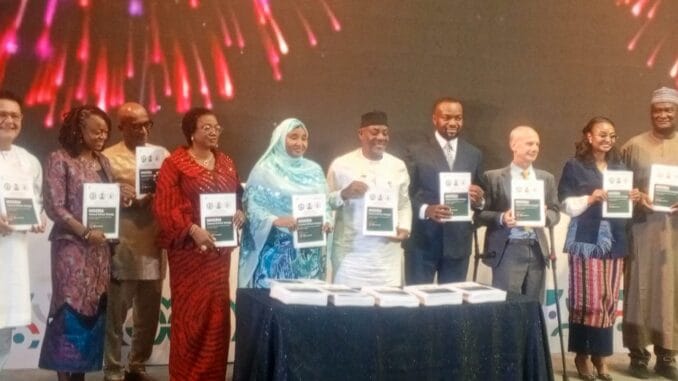
That is what the Federal Government says it wants to change with the new national Education Technology, EdTech, Strategy unveiled in Abuja on Tuesday.
The strategy, launched by the Federal Ministry of Education in partnership with the Federal Ministry of Communications, Innovation and Digital Economy, is designed to take digital learning beyond big cities to students in underserved communities across Nigeria.
Speaking at the launch, Minister of Education, Dr Maruf Tunji Alausa, said the goal is not just to put tablets and computers in schools, but to use technology to close the gap between rich and poor, urban and rural learners.
He said Nigeria has invested heavily in digital infrastructure and EdTech initiatives in the last three years, but without coordination, the impact has been limited.
Alausa admitted that poor internet connectivity remains the biggest obstacle, especially in remote and riverine areas.
He said extending internet access to those communities would remove geographical barriers and give every child a fair chance to learn.
“No Nigerian child should be denied access to quality education because of where they live,” he said.
The strategy provides a national framework for integrating technology into teaching, learning and school administration from basic to secondary, tertiary and non-formal education.
It is also expected to harmonise investments in digital infrastructure, learning platforms and teacher training, so that technology leads to real improvement in learning, not just decoration in classrooms.
In his goodwill message, World Bank Country Director, Matthew Verghis, warned that if Nigeria does not deliberately close the access gap, digital transformation could actually make inequality worse.
He said children in disadvantaged communities could be left further behind if EdTech only benefits those who already have internet, devices and good schools.
Verghis said emerging technologies, especially artificial intelligence, are reshaping the global economy and the future of work, making digital skills essential for Nigerian learners.
But he stressed that technology must complement teachers, not replace them.
“Human relationships must remain central to the learning process,” he said, adding that success should be measured by improved learning outcomes, not by the number of devices distributed.
He also called for a balance between digital literacy, critical thinking, creativity and strong foundations in literacy and numeracy.
The World Bank reaffirmed its support for Nigeria’s education and human capital development agenda, describing the strategy as an important step to align innovation with national priorities.
The National EdTech Strategy was developed in partnership with the World Bank and the Mastercard Foundation.
It is expected to guide deployment of digital solutions, strengthen teachers’ capacity and expand access to quality learning resources nationwide with special attention to those who have been left behind.