By Louis Achi
By empowering the next generation; by providing access to quality, inclusive education, societies promote critical thinking, empathy, and tolerance. It equips young people with the tools to positively advance their lives, question violent narratives and resolve conflicts peacefully.
It’s then little wonder that historically, education and human development planning remain twin ‘weapon-grade’ tools progressive states deploy to transform their societies.
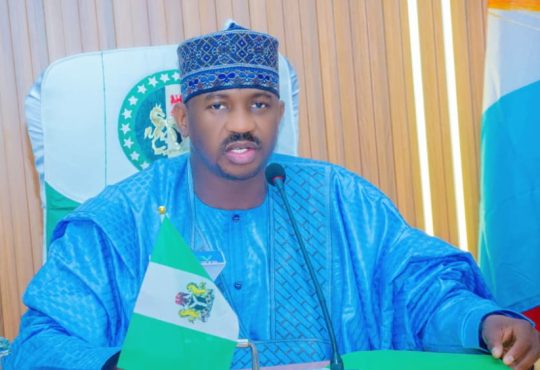
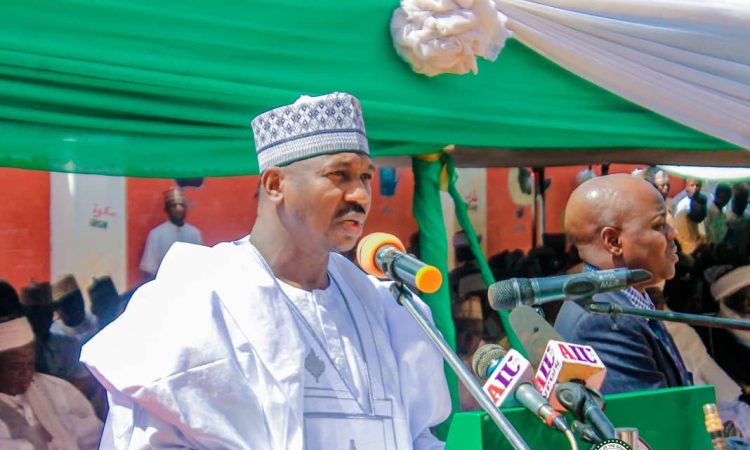
This transformative philosophy is at the core of Governor Ahmed Aliyu’s single-minded drive to lift Sokoto State with power of education. Significantly, education is a major element of his 9-point smart governance agenda.
To give teeth to his education vision, further transform the education sector and expand access to quality learning opportunities at the foundational tier, the Sokoto State Government under the focused leadership of Governor Ahmed Aliyu, recently kicked-off the construction of 56 secondary schools across the state under the Adolescent Girls Initiative for Learning and Empowerment (AGILE) Project.
The landmark intervention which is expected to be completed within 10 months, is designed to significantly improve educational infrastructure, increase school enrolment, and create a more conducive learning environment, particularly for adolescent girls and other vulnerable learners.
Governor Aliyu’s particular concern for adolescent girls evokes the iconic quote by the girl-child advocate and Nobel Peace Prize laureate Malala Yousafzai who declared that: “With guns you can kill terrorists, with education you can kill terrorism.” Malala’s powerful message highlights the fundamental difference between physically stopping an immediate threat and permanently dismantling the root causes of extremism which girls often bear the brunt. This fundamentally complements Governor Aliyu’s education and development vision.
Going forward, as part of the implementation process of constructing 56 secondary schools across the state, a team of engineers from the Ministry of Basic and Secondary Education, alongside AGILE Project consultants, officially handed over project sites to contractors across the state penultimate Tuesday.
It was revealed during the handover exercise of the AGILE Project Component Lead 1.1 Engineer Garba Alhaji, that 28 existing primary schools will be upgraded to Junior Secondary Schools, while another 28 Junior Secondary Schools will be elevated to Senior Secondary School status, thereby expanding access to secondary education in underserved communities.
With eyes on the future, each of the 56 schools will be equipped with modern facilities, including four fully furnished laboratories for Chemistry, Physics, Biology, and Computer Science, aimed at strengthening science and technology education. Within this template, every school will also benefit from the construction of 12 new classrooms, a multipurpose hall, solar-powered borehole systems, and a 14-unit toilet block comprising seven units each for male and female students.
It’s not disputable that Sokoto is a conservative society. Thinking out of the box in a highly conservative milieu surely presents its challenges but doing otherwise will surely diminish the best of Governor Aliyu’s efforts. The youthful governor has clearly taken up this challenge because he recognizes that the 21st Century can only align with progressive thinkers and not slackers.
In another recent, decisive, related intervention, the Sokoto State Government is on course to provide 2,500 computers, free Internet to 100 secondary schools, a move aimed at equipping students and teachers with modern digital skills.
According to the Sokoto State Commissioner for Basic and Secondary Education, Prof. Ahmad Ladan Ala, while declaring open a five-day Digital Literacy Skills Step down Training for 300 secondary school teachers drawn from the 23 local government areas of the state, digital literacy as an essential skill in today’s world, noting that the training would make teaching and learning easier, faster, and more effective across the state.
Prof. Ala also applauded the Sokoto State AGILE Project Coordinator, Dr. Mansur Isa Buhari, and the AGILE team for their outstanding performance in implementing projects that have positively impacted the education sector, including the provision of school infrastructure, boreholes, and other critical facilities.
On his part, the Sokoto State AGILE Project Coordinator, Dr. Mansur Isa Buhari, correctly noted that AGILE is a World Bank supported programme implemented by the Federal Ministry of Education in partnership with state governments. The project focuses on removing barriers that prevent adolescent girls from accessing and completing secondary education.
He also explained that AGILE supports the construction and renovation of schools, provision of scholarships and learning materials, promotion of life skills and digital literacy, and strengthening of teaching quality through continuous capacity building for teachers and school administrators.
It could be recalled that in the state’s 2026 budget, Governor Aliyu allocated ₦115.95 billion to the education sector. This is part of an overall ₦758.7 billion budget tagged the “Budget of Socio-Economic Expansion”. The ₦115.95 billion education sector allocation targets critical improvements in the state’s educational framework, specifically: Infrastructure – Rehabilitation of existing schools and the provision of essential facilities for tertiary institutions; Enhancing overall quality of teaching and learning standards; Procurement of educational materials such as laptops, computers, textbooks, and exercise books for basic schools under the State Universal Basic Education Board (SUBEB).
It is noteworthy that by allocating 15.3% of its total 2026 budget to education, the state is meeting UNESCO’s recommended benchmark of 15-20%, which demonstrates the administration’s priority for education, and in effect, its alignment with recommended UNESCO standard.
From the foundational to tertiary levels in the state, the governor’s premium on education is obvious from the re-accreditation of several courses in its tertiary institutions and the massive construction of schools, renovation of dilapidated buildings, provision of furniture, and instructional materials, the prompt payment of examination fees for students writing the West African Examinations Council (WAEC) and National Examinations Council (NECO) examinations, and the payment of outstanding scholarships for students undergoing various degree programmes.
Governor Ahmed Aliyu’s vision for educational transformation is mirrored in various specific interventions. His APC-led administration has prioritized education as a cornerstone of societal progress.
A significant highlight of his tenure is the intervention for 88 Sokoto State medical students affected by the crisis in Sudan. Rather than allowing these future healthcare professionals to languish in uncertainty, his administration facilitated their transfer to Usmanu Danfodiyo University Medical College, ensuring their education remained uninterrupted. This bold initiative underscores his administration’s commitment to nurturing human capital and fostering resilience in the face of challenges.
The Governor Aliyu-led administration has without dispute invested heavily in educational infrastructure and teacher training programmes. By creating enabling environment for both students and educators, the administration is building foundation for a more enlightened and competitive youth population in Sokoto State.
According to Hon. Danchadi, the state information commissioner, over 800,000 children in the state have been enrolled into basic education schools, marking a drastic increase in the number of enrolments into public primary schools and attributes the increased enrolment to the efforts of the state governor to improve education infrastructure across the state.
Significantly, the administration accomplished these feats without borrowing a kobo from any bank or financial institution within or outside the country.
With little question, Governor Aliyu recognizes the necessary complementarity and synergy between his administration’s first agenda – education – and the imperative transformation of Sokoto State. This recognition is clearly guiding his unswerving education vision and broad governance trajectory.