Charity Simon
The Minister of Education, Dr. Maruf Tunji Alausa, has launched the National Digital Training Academy (DTA), a new program designed to equip Nigerian youth with advanced digital skills and globally recognized certificates in emerging tech fields, as part of plans to build a stronger digital workforce for the country.
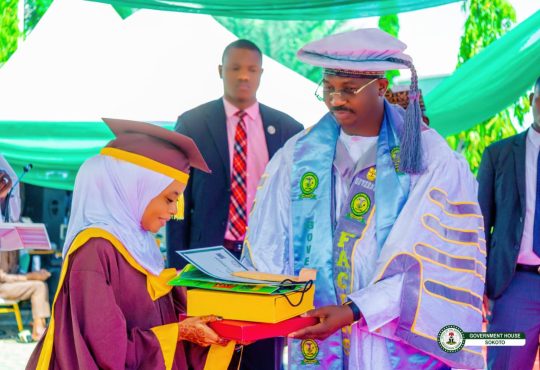
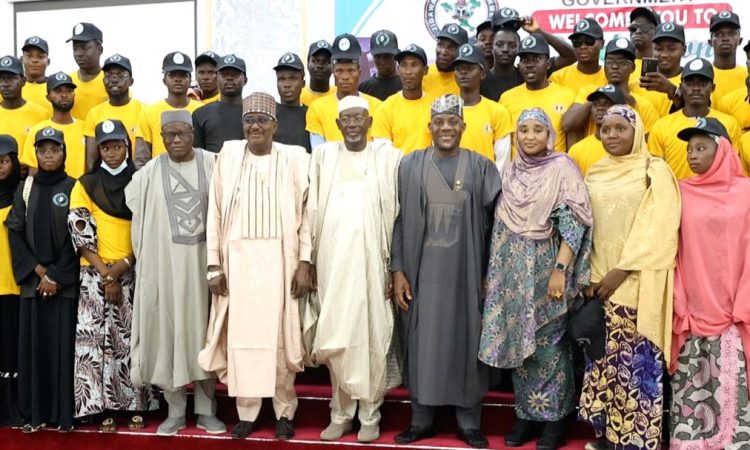
The Minister announced the initiative on Thursday at the graduation ceremony of 928 participants who completed a one-year professional diploma under the World Bank-backed Innovation Development and Effectiveness in the Acquisition of Skills (IDEAS) Project in Jigawa State.
The training was delivered in partnership with Baze University and focused on digital and technical skills meant to boost job opportunities, entrepreneurship, and innovation.
According to a statement released on Thursday by the Minister’s Special Adviser on Media and Communication, Ikharo Attah, the Digital Training Academy is a key project under President Bola Ahmed Tinubu’s Renewed Hope Agenda. It will be run jointly by the Federal Ministry of Education and the Federal Ministry of Communications, Innovation and Digital Economy through the 3 Million Technical Talent (3MTT) program.
The Academy will provide high-level training and internationally accredited certifications in Software Development, Cloud Computing, Cybersecurity, IT Automation, Product Management, Artificial Intelligence and Machine Learning, Internet of Things, Natural Language Processing, Fintech, Parallel Computing, and Quantum Computing.
Dr. Alausa said the initiative represents a major push by the Federal Government to build a workforce that can compete globally and meet the needs of the digital economy.
He noted that the Academy fits into the administration’s wider education reforms, which aim to use education as a driver for innovation, economic growth, and national development by giving learners skills that match industry demands.
The Minister added that the Digital Training Academy supports ongoing reforms in Technical and Vocational Education and Training (TVET), where skills acquisition has become a central focus of government policy.
He stated that the Ministry is expanding access to quality TVET, upgrading training institutions, deepening partnerships with industry, and creating more pathways for young Nigerians to gain the market-ready skills needed in today’s tech-driven world.
Dr. Alausa also pointed to the Federal Ministry of Education’s work on data-driven planning through the National Education Data Infrastructure (NEDI) and the Digitalised Nigeria Education Management Information System (DNEMIS).
He explained that both platforms are improving education governance by providing real-time information on student enrollment, teacher posting, school facilities, learner identification, and school safety. This, he said, will lead to better planning, smarter use of resources, and improved learning outcomes nationwide.
The Minister applauded Jigawa State Governor Umar Namadi for his focus on education, digital innovation, and youth empowerment, describing the graduation of the 928 trainees as proof of what can be achieved through cooperation between the Federal Government, states, development partners, universities, and the private sector.
Governor Namadi called the graduation another step forward in the state’s investment in human capital. He said the trainees received hands-on instruction in Artificial Intelligence, Blockchain, Cybersecurity, Software Engineering, Data Analytics, and other cutting-edge areas.
He also appreciated the Federal Ministry of Education, the World Bank-supported IDEAS Project, and Baze University for their role, and restated his government’s commitment to expanding ICT infrastructure and youth empowerment through partnerships with NITDA, GLUWA, and KOICA.
At the event, the governor announced that 30 top-performing graduates would get laptops from the state government, while four outstanding participants had been offered jobs at Baze University.
He also launched the Jigawa State 12-Point Agenda Digital Portal, which will give citizens real-time updates on government programs across the state’s 27 LGAs and 287 wards to promote transparency and accountability.
In her remarks, the Minister of State for Education, Professor Suwaiba Sa’id Ahmad, said the graduation shows the Federal Government’s commitment to producing young Nigerians who are digitally skilled, innovative, and globally competitive.
She praised the Jigawa State Government, the World Bank, the IDEAS Project, Baze University, and other partners for supporting the program, and encouraged the graduates to keep learning and use their skills to solve real problems.
Congratulating the graduates, Dr. Alausa urged them to adopt continuous learning and innovation. He stressed that the skills they gained should be used to create solutions, generate jobs, and contribute to national development.
He reaffirmed that the Federal Ministry of Education will keep expanding access to quality TVET, scale up digital skills training through the National Digital Training Academy, strengthen collaboration with governments and development partners, and push reforms that will prepare Nigerian learners to thrive in the 21st-century economy.