Charity Simon, Abuja
With 47 million Nigerians practicing open defecation, Nigeria has been ranked second in the world and first in Africa among countries with the highest number of people defecating in the open.
The above figure, as released by the United Nations Children’s Fund (UNICEF), constitutes 24.4 percent of the West African nation’s total population.
A Water, Sanitation and Health (WASH) specialist of the UNICEF, Mr. Bioye Ogunjobi, while speaking during a two-day Media Dialogue on Sanitation – Clean Nigeria: Use the Toilet Campaign in Ibadan, Oyo State, revealed that 16 million of the figures live in the North Central part of the country.
The Union reports that the event was organized in collaboration with the Federal Ministry of Information, UNICEF, and supported by the European Union, UKAid.
Ogunjobi added that 32 million Nigerians have no access to improved toilets; hence, the need for political will in order to achieve the 2025 target of making Nigeria open defecation free.
“Currently, only 13 local government areas from four states of Bauchi, Benue, Cross River and Jigawa are open defecation free. We have to mobilize the entire country otherwise the 2025 target will not be possible. Currently 102, 000 children die annually due to diseases related (to) sanitation,” he said.
According to him, North Central states lead in open defecation with 53.9 percent, followed by South West with 28.0 percent, South East 22.4 percent, South-South 17.9 percent and North East 10.3 percent.
He said increased and well targeted WASH funding at all levels especially for rural areas will help improve sanitation as well as improve the country’s chances of attaining the 2025 target.
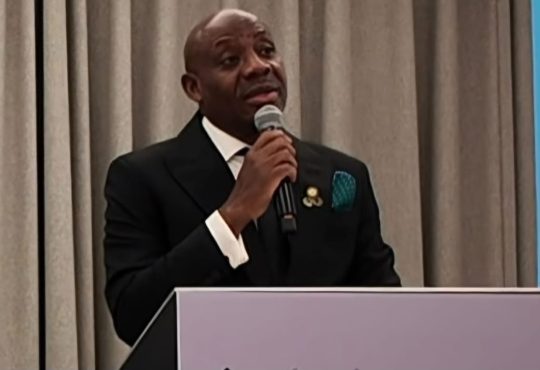
In his welcome address, Head, Child Rights Information Bureau, Federal Ministry of Information, Mr. Olumide Osanyipeju said the Nigerian government has declared a state of emergency on WASH Nigeria, and launched an Open Defecation Free (ODF) campaign strategy to jump-start the country’s journey towards ending open defecation.
“The Federal Ministry of Water Resources with support from UNICEF, in partnership with Inter-Ministerial Agencies, Civil Society Partners, the Private Sector, and Nigeria is currently leading the ODF campaign to end open defecation in the country by 2025, and achieve universal access to safely manage sanitation by 2030.
“Clean Nigeria: Use the Toilet” campaign is one of the most ambitious behaviour-change campaigns in Nigeria. The campaign to end open defecation is a key initiative that will reach many unserved populations.
“Sanitation is essential to the survival and development of children. It can reduce the severity and impact of malnutrition. It can also help in reducing the spread of intestinal worms, as well as promoting dignity and boosting safety, particularly among women and children. Sanitation standards are intended to ensure that people do not suffer adverse health effects that can result if toilets are not available when needed. Proper sanitation facilities promote health because it allows people to dispose off their waste appropriately.
“Open defecation perpetuates a vicious cycle of disease and poverty. Inadequate waste disposal promotes the infection cycle of many agents that can spread through contaminated soil, food. water and insects such as flies. Open defecation is incredibly dangerous, as contact with human waste can cause diseases such as cholera, typhoid, hepatitis, polio, diarrhoea, worm infestation and undernutrition. We must double our current efforts in order to end open defecation by 2030,” he stated.
He commended UNICEF, European Union, UK Dept, other groups and individuals for also advancing the country’s Clean Nigeria Campaign to make life safe in communities, and urged the media to increase awareness about the impact of open defecation in Nigeria.
He said the Media Dialogue on Sanitation and the campaign to end open defecation focusing on the South West Zone of the Federation was aimed at creating awareness about “Clean Nigeria: Use the Toilet” campaign, and mobilise resources to sustain the national movement.