Charity Simon
The Universal Basic Education Commission, UBEC, says it is set to commence implementation of its 10-year Universal Basic Education Roadmap, 2026 to 2035, in the first week of October.
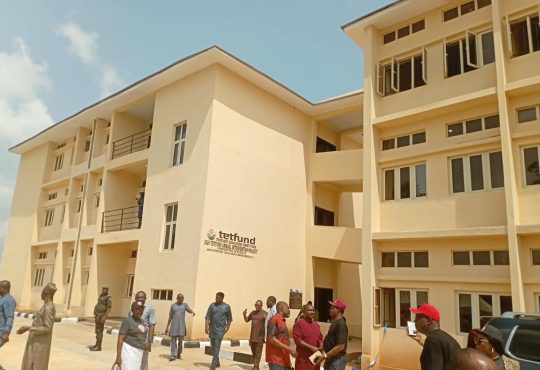
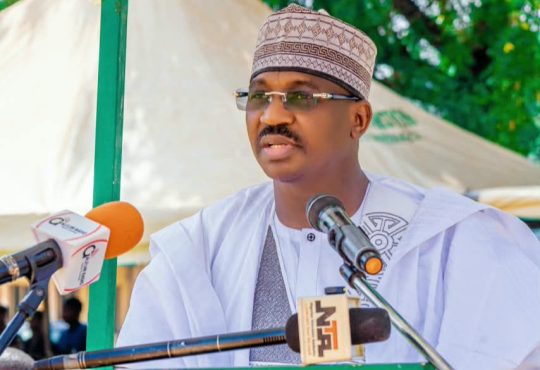
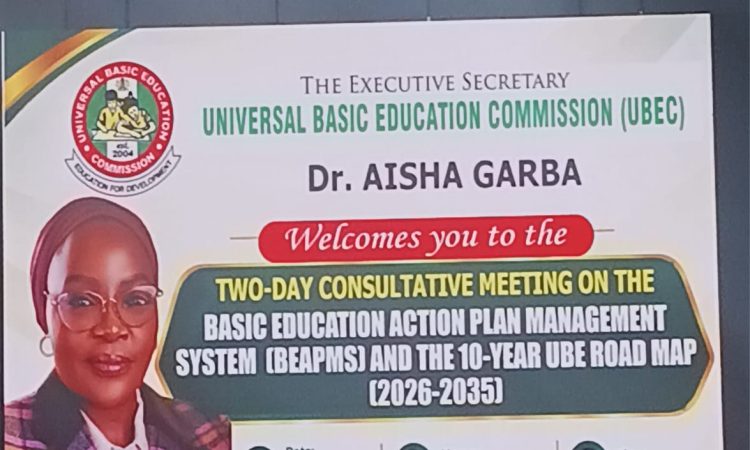
The Executive Secretary of UBEC, Dr. Aisha Garba, said the roadmap would end the practice of executing isolated infrastructure projects without addressing the overall needs of schools.
Garba spoke in Abuja on Monday at a two-day Consultative Workshop with Chairmen of the 36 State Universal Basic Education Boards, SUBEBs, and UBEC directors.
At the event, the UBEC boss unveiled the Basic Education Action Plan Management System, BEAPMS, saying the Commission has adopted a “whole school approach” to basic education development.
According to her, the new digital platform is aimed at enhancing planning, transparency and monitoring of basic education projects across the country.
She said the Commission had introduced reforms to ensure that interventions are based on the comprehensive needs of individual schools rather than fragmented projects.
She explained that under the new approach, states must identify and address all critical gaps in a school before their action plans can be approved by UBEC.
“For any state to do renovation, you have to do a whole school approach. A whole school approach means, you take a school and you look at all the gaps,” she said.
According to her, the system is designed to stop the practice of building a few classrooms or supplying furniture without providing other essential facilities needed for effective learning.
“You don’t just put in a furniture or you drop two blocks of classrooms and you leave because you want to give out awards. No, you have to take in all the comprehensive needs of that particular school,” she said.
She stated that where a school lacks fencing or toilets, such facilities must be captured in the intervention plan, while additional classrooms must be matched with required toilet facilities based on projected enrolment.
The Executive Secretary also disclosed a review of the matching grant formula to allow states to deploy UBEC funds in line with their specific priorities.
She said the old formula focused mainly on new infrastructure, which left some states unable to access funds because their priority was no longer building new schools but maintaining and upgrading existing ones.
“The new formula allows each state to look at their own needs. If their needs on the ground is furniture, if their needs on the ground is renovating all schools to ensure that our schools now have fencing, have computers, have furniture, then they are allowed to do that,” she said.
She added that the new framework could also support interventions such as enrolment materials and additional teachers where states identify rising enrolment as a key priority.
On the new digital Basic Education Action Plan Management System, BEAPMS, she said it will also enable communities to take part in monitoring projects executed under the roadmap.
The UBEC boss said the platform would be made public to allow parents and community members track projects, funding and quality of interventions delivered in their schools.
“This will also allow us to bring in the community to be part of the monitoring of the projects that we do on the ground,” she said.
She said information on funds accessed by each state would be published on the Commission’s website, along with details of projects being executed.
“With that, community can hold us accountable to the money we have accessed from UBEC, and then also the projects we’re doing on the ground, as well as the quality of projects we’re doing,” she said.
The Commission said the digital platform had been under development for over a month and that SUBEB chairmen have now been fully onboarded ahead of full implementation in October.
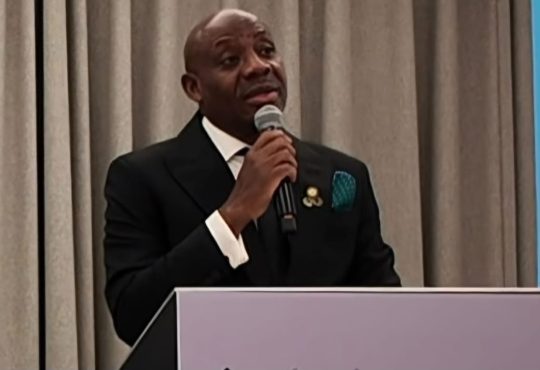
Also speaking, the Dean of SUBEB Chairmen, Prof. Shehu Adaramaja, said the consultation was important as it would help stakeholders agree on a common direction for basic education delivery over the next 10 years.
“In the next two days, we’ll pay attention to all the strategies and the initiatives toward the development of a roadmap for the next 10 years on how to provide access, provide quality service, and of course, strengthen our systems in line with our new basic education management system,” he said.
Adaramaja, who is also the Chairman of Kwara SUBEB, said the meeting was designed as a hands-on exercise, with Directors of Research and Statistics expected to actively participate in developing the framework that will guide their states’ basic education action plans.
He noted that UBEC’s intervention is no longer limited to physical infrastructure, as other components are now being integrated to strengthen basic education service delivery.
Earlier, UBEC Director of Physical Planning, Arc. Nura Ibrahim, said the exercise would allow stakeholders to review and validate the proposed roadmap while leveraging their technical expertise and experience in implementing basic education programmes across the states.