Charity Simon
About 10 million Nigerian children are currently excluded from Early Childhood Care, Development and Education (ECCDE), a situation the Universal Basic Education Commission (UBEC), says is worsening poor learning outcomes across the country.
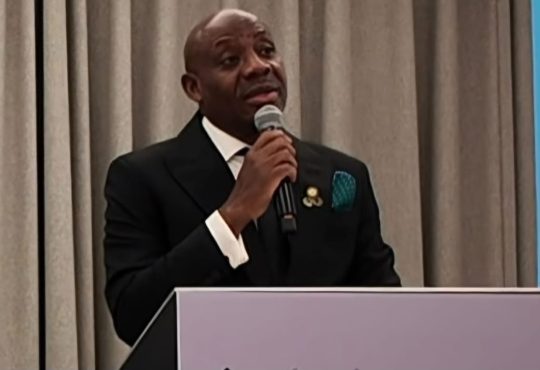
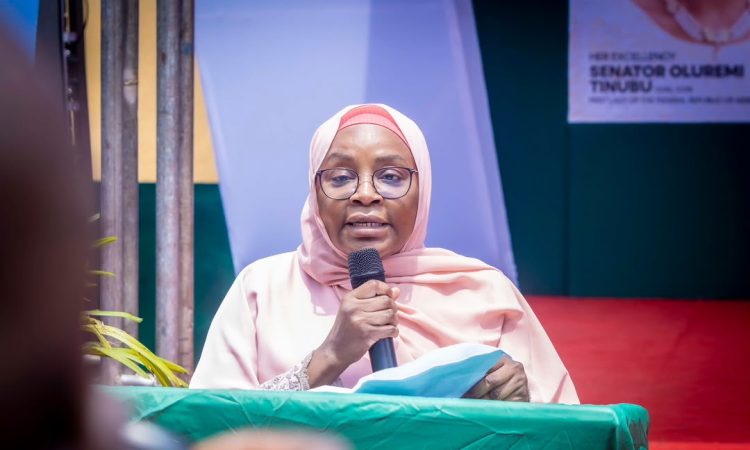
The Executive Secretary of UBEC, Dr. Aisha Garba, disclosed this on Monday in Abuja at a three-day capacity-building workshop for state actors on the use of the ECCDE Minimum Standards, Implementation Guidelines and UNICEF Parental and Community Engagement documents.
Garba, who was represented by the Deputy Executive Secretary (Technical) of UBEC, Rasaq Olajuwon Akinyemi, said only 35.6 per cent of children aged 36 to 59 months in Nigeria currently attend any form of early childhood education.
She said the challenge is further worsened by developmental delays among young children, noting that analysis of the 2021 Multiple Indicator Cluster Survey, MICS, showed that about 46 per cent of children aged 24 to 59 months were developmentally off-track.
According to her, the impact of inadequate early childhood education becomes more evident as children move up the education ladder.
“Only 35.6 per cent of Nigerian children aged 36 to 59 months attend any form of early childhood education. That leaves roughly 10 million of our youngest children outside ECCDE altogether,” she said.
Garba added that about 70 per cent of 10-year-olds in Nigeria cannot read and comprehend a simple text, while only about 2.4 million out of 5.9 million children who enroll in primary school annually remain in school by the end of junior secondary school.
She said early childhood development must therefore be treated as an integrated national priority and not just as a stand-alone education programme.
“There is no cheaper place in the education system to buy results,” Garba said, citing Nobel Laureate James Heckman’s estimate of about 13 per cent annual return per child on high-quality birth-to-five programmes.
The UBEC boss urged states to ensure ECCDE interventions are captured in their State Matching Grant Action Plans, warning that programmes not included in the plans would not be funded, procured or monitored.
“I must be blunt: what is not in the Action Plan will not be funded, will not be procured and will not be monitored,” she said.
Garba also announced that the deadline for states to submit their ECCDE Action Plans for the next intervention year has been extended from September 30 to October 5, 2026.
She, however, cautioned that the extension should not be seen as an opportunity to delay, stressing that submissions after the new date would not be considered.
“The extension is not an invitation to be delayed. I expect every State to leave Abuja with a costed, integrated and inclusive draft plan, to present it to your Executive Chairman on your return, and to submit the final plan through the digital planning template within the extended period. Plans received after that date will not be considered for this intervention year,” she said.
She further directed states to design ECCDE programmes around the needs of the whole child by working with relevant sectors including health, nutrition, water and sanitation, women affairs, social welfare and Local Government Education Authorities, LGEAs.
Garba said the 2023-24 Nigeria Demographic and Health Survey, NDHS, put stunting among children under five at 40 per cent nationally, ranging from 12 per cent in Rivers State to 65 per cent in Katsina State.
She said ECCDE centres must also comply with basic standards relating to child safety, supervision, safeguarding, food and water safety, structural integrity and emergency exits.
The UBEC boss charged states to ensure that children with disabilities and those in hard-to-reach, nomadic, riverine and conflict-affected communities are not left out of ECCDE programmes.
She also called for stronger engagement with parents, caregivers, School-Based Management Committees, traditional institutions and religious bodies, noting that communities can serve as key delivery platforms for children who cannot be easily reached through conventional classrooms.
Earlier, the Acting Director, Department of Special Programmes and Early Childhood, UBEC, Dr. Chijioke J. Onwuzurike, said Nigeria currently has over 45 early childhood development delivery channels spread across health, nutrition, education, agriculture and social protection sectors.
She, however, said the multiplicity of channels has led to fragmentation, with platforms sometimes duplicating efforts, failing to share data and delivering inconsistent services across communities.
Onwuzurike said the Commission expects every state, within the next 18 months, to map and streamline its existing early childhood development platforms, establish functional multi-sectoral coordination mechanisms and strengthen frontline workers’ capacity for screening and follow-up.
She said the goal is to ensure children do not fall through the cracks between sectors.
“School readiness is not something that begins at the primary school gate; by the time a child reaches that gate, it is largely decided,” Onwuzurike said.
She urged state actors to use the National ECCDE Minimum Standard and Implementation Guidelines as working tools rather than documents to be kept on shelves.
Also speaking, UNICEF Nigeria Education Specialist, Yetunde Oluwatosin, said early childhood development is critical to tackling Nigeria’s out-of-school problem.
She compared early childhood development to laying the foundation of a building, stressing that getting the foundation right will help children enroll at the appropriate age, stay in school and transition smoothly through the education system.
“So it’s really important for us to get the foundation right, because it helps the child to continue learning,” she said.
Oluwatosin said UNICEF had supported the Federal Government in developing the ECCD policy, minimum standards and curriculum, adding that the documents were benchmarked against global standards.
The three-day workshop, organised by UBEC’s Department of Special Programmes and Early Childhood in collaboration with UNICEF, drew state education actors including SUBEB Directors of Special Programmes, ECCDE Desk Officers and UBEC officials.
The workshop aims to strengthen state-level capacity for ECCDE planning, financing, implementation, monitoring, data management and community engagement, while enabling participating states to develop or enhance state-specific ECCDE and early childhood development work plans.