By Karen Ibrahim
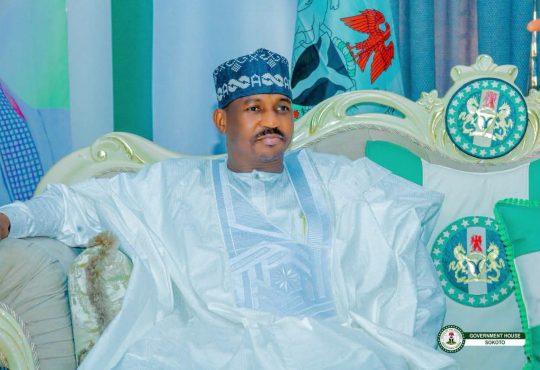
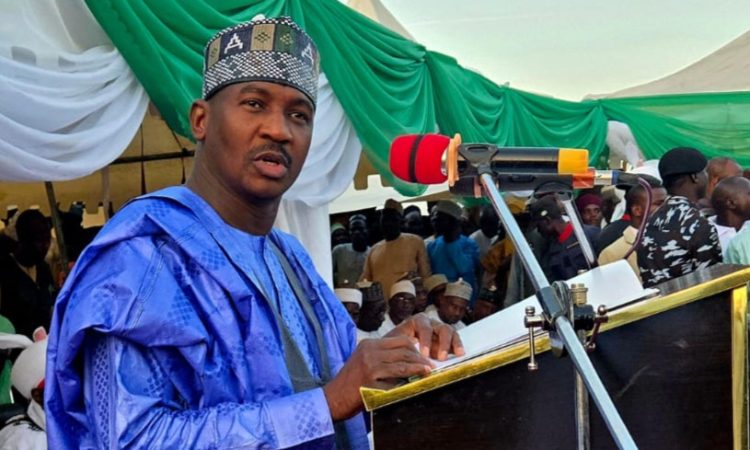
The political machinery built by Governor Ahmed Aliyu and Senator Aliyu Magatakarda Wamakko has shaped the direction of Sokoto State politics since 2007. The All Progressives Congress (APC) understands better than any other party what it takes to win elections convincingly in the state.
Instead of relying only on high-profile rallies and media campaigns, the APC has entrenched itself at the grassroots by methodically consolidating its influence across the 244 political wards. Backed by the advantages of incumbency and a wide network of loyal stakeholders, the party has already begun preparations for the 2027 elections through sustained grassroots mobilization.
In Sokoto, where political success is built on enduring relationships and trust, this approach is likely to prove decisive. The recent defection of Mallam Saidu Umar, the PDP’s 2023 governorship candidate, to the APC is the latest indication of the ruling party’s dominance and the growing challenges facing the opposition.
For the APC, election campaigns are important, but they are seen as the final phase of a foundation that has been carefully built over the years.
Under the purposeful leadership of Governor Ahmed Aliyu, Sokoto State is witnessing remarkable progress in healthcare, education, agriculture, water supply, road infrastructure, housing, security, and religious affairs.
From day one, however, the administration recognized that delivering on campaign promises alone would not guarantee victory in 2027. Beyond governance, the governor and the APC leadership have deliberately worked to strengthen the political platform that brought them to power.
This strategy has become even more critical at a time when internal crises have destabilized many political parties across the country, forcing governors and lawmakers to seek alternative platforms. In contrast, the APC in Sokoto has remained cohesive. It has expanded its grassroots structures and consolidated the alliances that have underpinned its electoral success for nearly two decades.
A major factor behind this stability is the relationship between Governor Ahmed Aliyu and his political mentor, Senator Aliyu Wamakko. They have managed their relationship with maturity, leaving little room for those who thrive on creating division.
In Nigerian politics, cracks within leadership are often exploited by opportunists. But in Sokoto, the relationship between the governor and the senator is anchored on trust, consultation, and clearly defined roles. This has made it difficult for mischief-makers to manufacture the kind of friction that has destabilized many political families.
The harmony at the top has filtered down to the rest of the party. It has strengthened cohesion, minimized internal disputes, and allowed the government to focus on governance while the party concentrates on political organization. A united leadership produces a united party, and that has become one of APC’s greatest strengths in Sokoto.
The conduct of the party’s primaries further demonstrated this cohesion. Where consensus was adopted, it worked successfully because aspirants and stakeholders were willing to subordinate personal ambitions to the interest of the party.
Unlike the acrimonious contests seen in many other parties, the consensus approach in Sokoto minimized rancor and produced candidates widely accepted across the party structure. This again reflected a leadership committed to consultation and preserving the solidarity needed to approach elections from a position of strength.
Another reason for APC’s cohesion is the premium Governor Aliyu and Senator Wamakko place on the party. They do not treat it as a mere electoral vehicle.
Governor Aliyu regularly acknowledges the authority of the party by publicly saluting the State Chairman with the phrase “Party Supremacy.” This has become symbolic of his belief that elected officials remain accountable to the platform that brought them to office.
Beyond symbolism, the administration maintains close engagement with the party hierarchy and grassroots members. This culture of consultation and mutual respect has built confidence, reduced disputes, and reinforced a sense of belonging among party members. While many parties are weakened by elected officials who sideline party structures, APC in Sokoto remains strong because its leaders continue to accord the party its due relevance.
Nigeria’s political culture was weakened by years of military rule. Many politicians who grew up during that period had little experience with how parties function in a democracy. As a result, party structures are often abandoned after elections.
But Nigeria’s Second Republic offered a different example. President Shehu Shagari regularly attended party caucus meetings because he understood that governance required working with the party. President Olusegun Obasanjo later did the same. These examples show that respecting party structures is essential for political stability.
The recent wave of defections into the APC in Sokoto is therefore not surprising. Politicians gravitate toward parties that are stable and focused because that guarantees better chances of electoral success. While Governor Aliyu’s achievements have boosted the administration’s popularity, those achievements would count for little without an organized structure to convert goodwill into votes. Roads, schools, hospitals, and agricultural programs provide party mobilizers with evidence to take back to their communities. Governance itself has become a campaign tool.
Governor Ahmed Aliyu and Senator Aliyu Wamakko have demonstrated that elections are not won on election day. They are won through years of organization, consultation, discipline, reconciliation, and grassroots engagement.
Development earns the confidence of the electorate, but only a disciplined and united political organization can convert that confidence into victory. That is the philosophy guiding the APC in Sokoto.
Judging by the cohesion of its leadership, the strength of its grassroots structures, and the steady realignments in its favor, the APC is approaching the 2027 elections from a position of considerable strength. Any opposition seeking to unseat it must first contend with a political machinery that has been patiently built over nearly two decades and remains one of the most organized in contemporary Nigerian politics.