Charity Simon
Six civil society organisations have asked the Independent National Electoral Commission)INEC), to show concrete proof that its election technology, result management systems and operational plans are ready for the 2027 general election.
The groups want INEC to specifically demonstrate that the result upload failure experienced during the 2023 general election has been fixed and that its key technologies have been tested and can be independently verified.
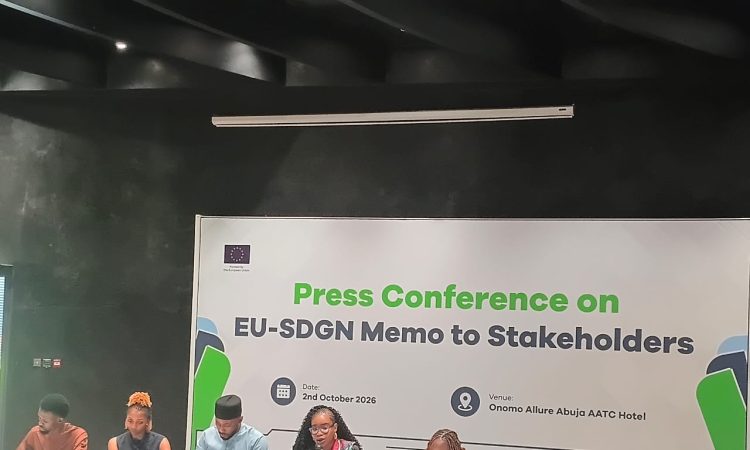
The demand is contained in an open memorandum endorsed by the Centre for Media and Society (CEMESO), International Press Centre, (IPC), Nigerian Women Trust Fund (NWTF), TAF Africa, The Kukah Centre, (TKC), and Yiaga Africa.
With the presidential and National Assembly elections scheduled for January 16, 2027, the organisations said INEC should use the period before the polls to provide measurable evidence of preparedness, rather than general assurances.
“INEC must move beyond general assurances and provide regular, verifiable evidence of operational readiness,” the groups said.
They urged the Commission to publish a dated readiness dashboard covering election funding, procurement milestones, delivery and storage of sensitive and non-sensitive materials, their secure distribution and contingency plans for areas affected by insecurity or poor infrastructure.
The CSOs also asked INEC to disclose recruitment requirements and numbers for election personnel, training schedules, deployment plans and welfare provisions for ad-hoc staff.
They said vacancies in critical leadership and technical positions should be filled early to safeguard institutional capacity and operational continuity.
Focus On BVAS, IReV
Election technology is one of the key concerns highlighted in the memorandum.
The organisations asked INEC to clearly explain how the Electoral Act 2026 and its regulations and guidelines will apply to voter accreditation, polling unit result management, collation and publication of results, including the use of electronic Form EC8A.
They also called for public stress tests of the Bimodal Voter Accreditation System, BVAS, and the INEC Result Viewing portal, IReV, with results made public.
INEC should equally disclose fallback procedures for technology failures and provide clear audit trails for any corrections or delayed uploads of election results, they said.
Referring to the result upload challenges during the 2023 general election, the groups asked the Commission to “publish verifiable evidence” that the problem has been resolved.
They said the improvements should be further verified by observers during INEC’s planned mock accreditation exercise.
The organisations also want INEC to publish guidelines for collection of Permanent Voter Cards, PVCs, detailing logistical arrangements and personnel to be deployed to avoid delays and possible disenfranchisement.
They further asked the Commission to clarify arrangements for downloadable voter cards and provide clear guidance on how they would be used during the general election.
Parties Warned Against Intimidation, Vote Buying
The memorandum also places responsibilities on political parties and candidates, security agencies, the media, judiciary, community leaders and civil society.
Political parties and candidates were urged to shun hate speech, ethnic and religious incitement, threats, coercion, vote-buying and obstruction of lawful political activities.
The groups also warned against using incumbency advantage to deny opposition parties access to campaign venues, outdoor advertising and other shared resources.
They said access should be governed by transparent and non-discriminatory rules that apply to all parties and candidates.
CSOs Demand Public Election Security Plan
The organisations asked the Nigeria Police Force and other security agencies to publish a coordinated election security framework detailing threat assessments, risk mitigation measures, command responsibilities, rules of engagement, protection for vulnerable communities and rapid response and complaints mechanisms.
Security personnel, they said, must operate impartially and should never be used as tools for partisan coercion.
The media was charged to provide balanced, issue-based coverage, distinguish journalism from sponsored content, verify viral claims before amplification and correct errors promptly and prominently.
Religious and community leaders were urged to reject violence, exclusion and collective blame, while the judiciary was asked to resolve election disputes within stipulated timelines and publish reasoned decisions without delay.
The groups also beamed the searchlight on themselves, saying civil society must improve coordination of election observation and voter education, verify claims before advocacy and maintain independence and consistency in reporting.
“We must demand from ourselves the same transparency, fairness and accountability we demand from public institutions,” the memorandum said.
The organisations said the credibility of the 2027 elections will depend largely on decisions and preparations made before election day.
They called on all institutions involved in the electoral process to state clearly what they will do, when they will do it and how Nigerians can track their progress.